
Over the last decade, Indian lenders did something that looks irrational on paper.
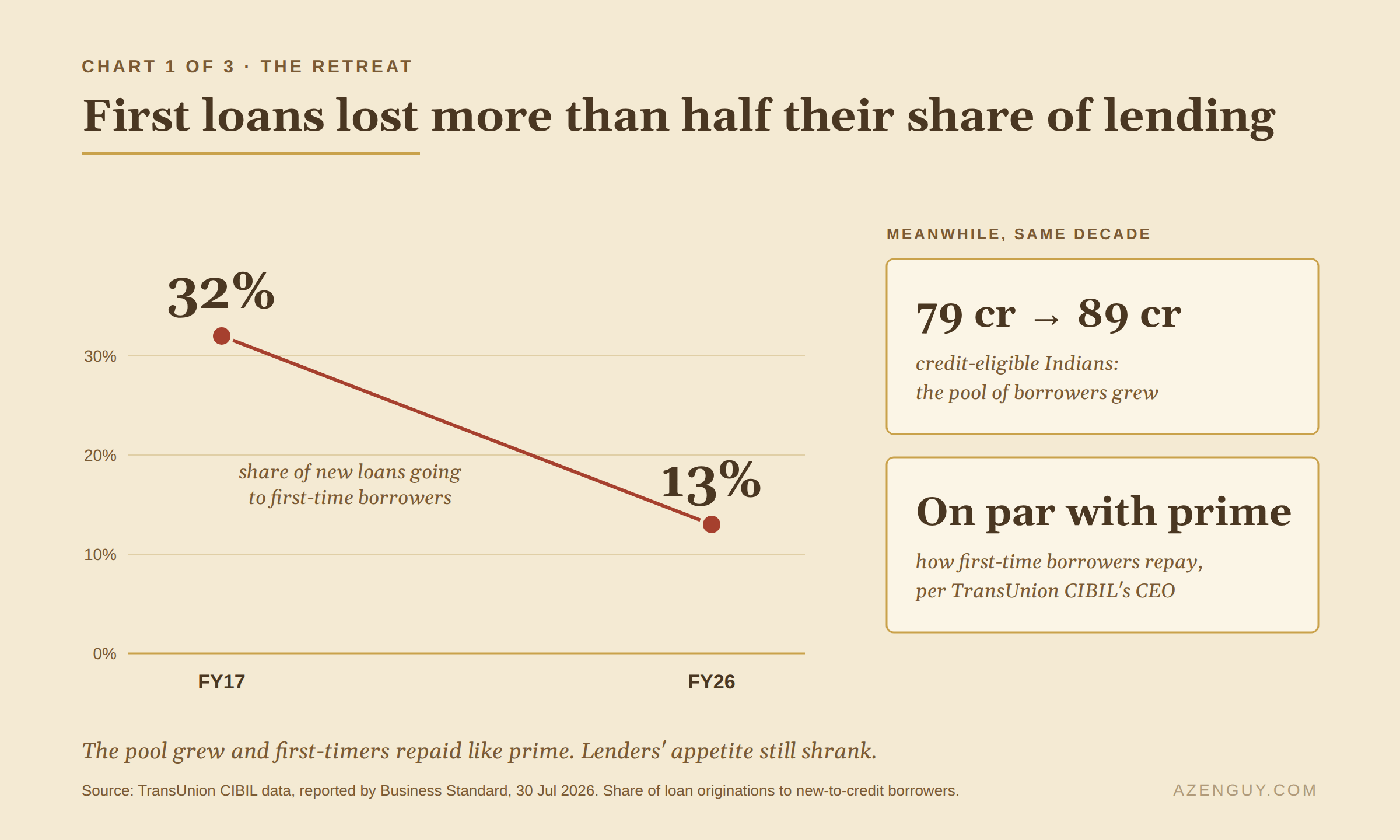
They cut lending to first-time borrowers from about a third of all new loans to about an eighth. Over the same stretch, those borrowers kept repaying on par with prime or near-prime customers, and the pool of people eligible for credit grew by 10 crore.
Walking away from a growing segment that repays like prime is leaving money on the table. And the number is market-wide, so this is the whole industry making the same call.
When an entire market makes a choice that looks irrational, the choice is usually rational and the books are measuring the wrong thing. That’s what I think is happening here. Lenders book the first loan as credit risk. It behaves like a purchase of information, in a market set up so that the buyer can’t keep what it bought.
Three charts will help make my case.
Chart 1: Lenders walked away from a segment that kept paying
The obvious explanations don’t cover it.
Many cite risk as an easy excuse, yet it doesn’t explain why NTC customers get sidelined. TransUnion CIBIL Limited‘s CEO says first-time borrowers repay on par with prime or near-prime.
The RBI raised risk weights on unsecured consumer credit from 100% to 125% in November 2023, and everyone tightened. But the first-timer share was already near 20% by 2023, before that change.
The credit demand is still there. First-time applicants make roughly a quarter of credit enquiries and get about a sixth of new accounts. They keep asking for credit. Lenders increasingly are saying no.
So the answer has to sit in the economics of the first loan itself.
Chart 2: The first loan manufactures a credit history
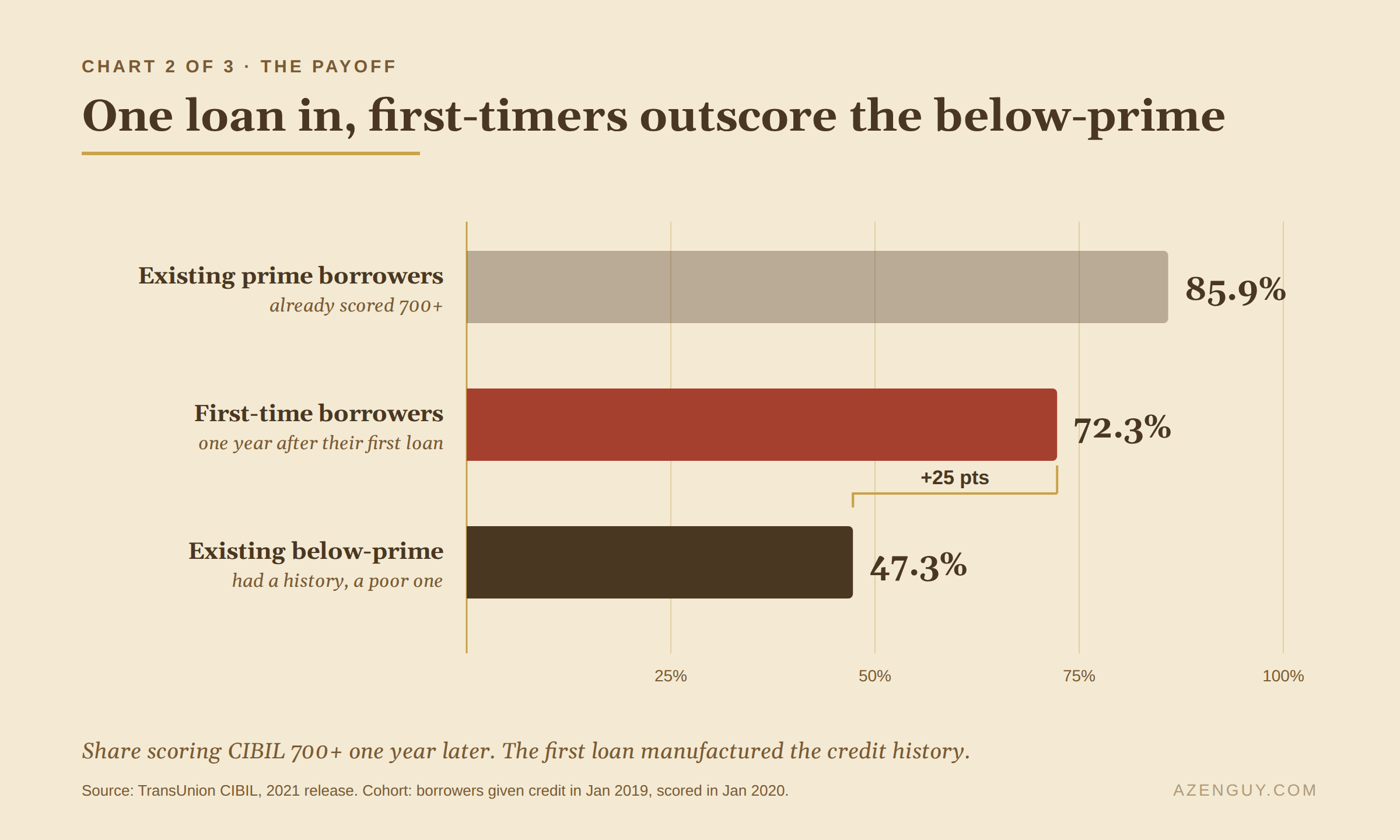
Of the first-time borrowers given credit in January 2019, 72% scored 700+ on CIBIL a year later. Among existing below-prime borrowers, people that the bureau already knew, only 47% scored above 700.
Before the loan, the bureau knew nothing about these borrowers. Twelve months of repayments later, most of them look better than people with years of history.
That is the real output of a first loan. The interest on a small first ticket barely covers the cost of acquiring the borrower. The asset is the year of observed repayment behaviour.
Banking economists have a name for what the lender who produces that information should earn: an information rent.
So first-loan losses belong to R&D. Lenders book them as NPA (as they must!) but it’s the impact that should dictate business strategy, not accounting treatment.
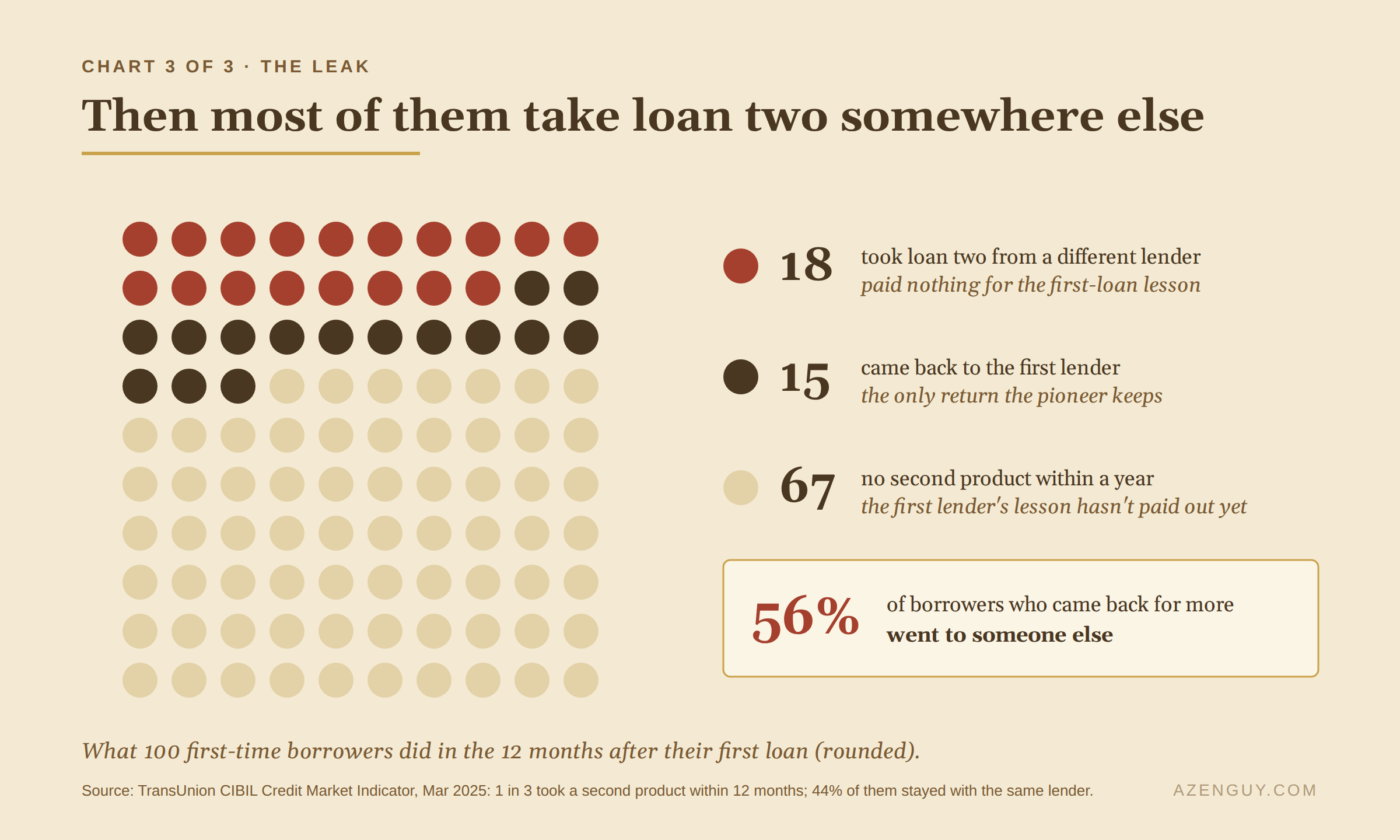
Chart 3: Then the market hands the result to a competitor
Since 2015, RBI has required every regulated lender to report its borrowers to all four credit bureaus. The first lender pays for the experiment. The result is then published to the whole market - just a soft pull away.
The market reads it. Of 100 first-time borrowers, about 33 take a second credit product within a year. Only 15 go back to the lender that took the first bet. The other 18 take their new score somewhere else.
The pioneer carries the loss rate of loan one. The follower gets a graduated borrower at near-prime risk and pays nothing for the lesson.
The exclusive window is also shrinking. Bureau reporting moved from monthly to fortnightly in 2025, and to weekly from July 2026. Good for the system. For the first lender, the repayment record is now private for about a week.
The free-rider problem in lending is real
The first loan is the only credit product where you pay for the lesson and your competitor gets the transcript.
Read in sequence, the retreat in Chart 1 looks less like timidity and more like a rational answer to a free-rider problem. Why fund an experiment your rivals get to read?
Lenders who still want to write first loans have three levers:
Keep what the bureau doesn’t record. The bureau gets the repayment. It doesn’t get the device signals, cash-flow patterns or consented account data behind the decision. That part of the lesson stays private, and it compounds.
Make the second offer before the new score travels. With weekly reporting, a pre-approved loan two has to reach the borrower before a competitor’s pre-approval does.
Judge the programme on retention to loan two. A first-loan book with 5% losses and 70% retention to loan two is a better business than one with 3% losses that trains borrowers for someone else.
We keep calling this an inclusion problem. On a lender’s P&L it’s a property-rights problem: the first loan produces an asset the lender isn’t allowed to keep.
Sources
Chart 1: TransUnion CIBIL data reported by Business Standard, 30 Jul 2026 (NTC share 32% → 13%; 79 cr → 89 cr; repayment on par with prime). ~20% in 2023: Business Standard, 24 Sep 2025. Enquiries vs accounts (24% vs 16%): TransUnion CIBIL, 2021
Chart 2: TransUnion CIBIL, 2021 (72.30% vs 47.29% vs 85.90%, Jan 2019 → Jan 2020)
Chart 3: TransUnion CIBIL CMI, Mar 2025 (1 in 3 took a second product in 12 months; 44% with the same lender)
Bureau membership: RBI circular DBR.No.CID.BC.59/20.16.056/2014-15, 15 Jan 2015. Weekly reporting from 1 Jul 2026: Paisabazaar explainer